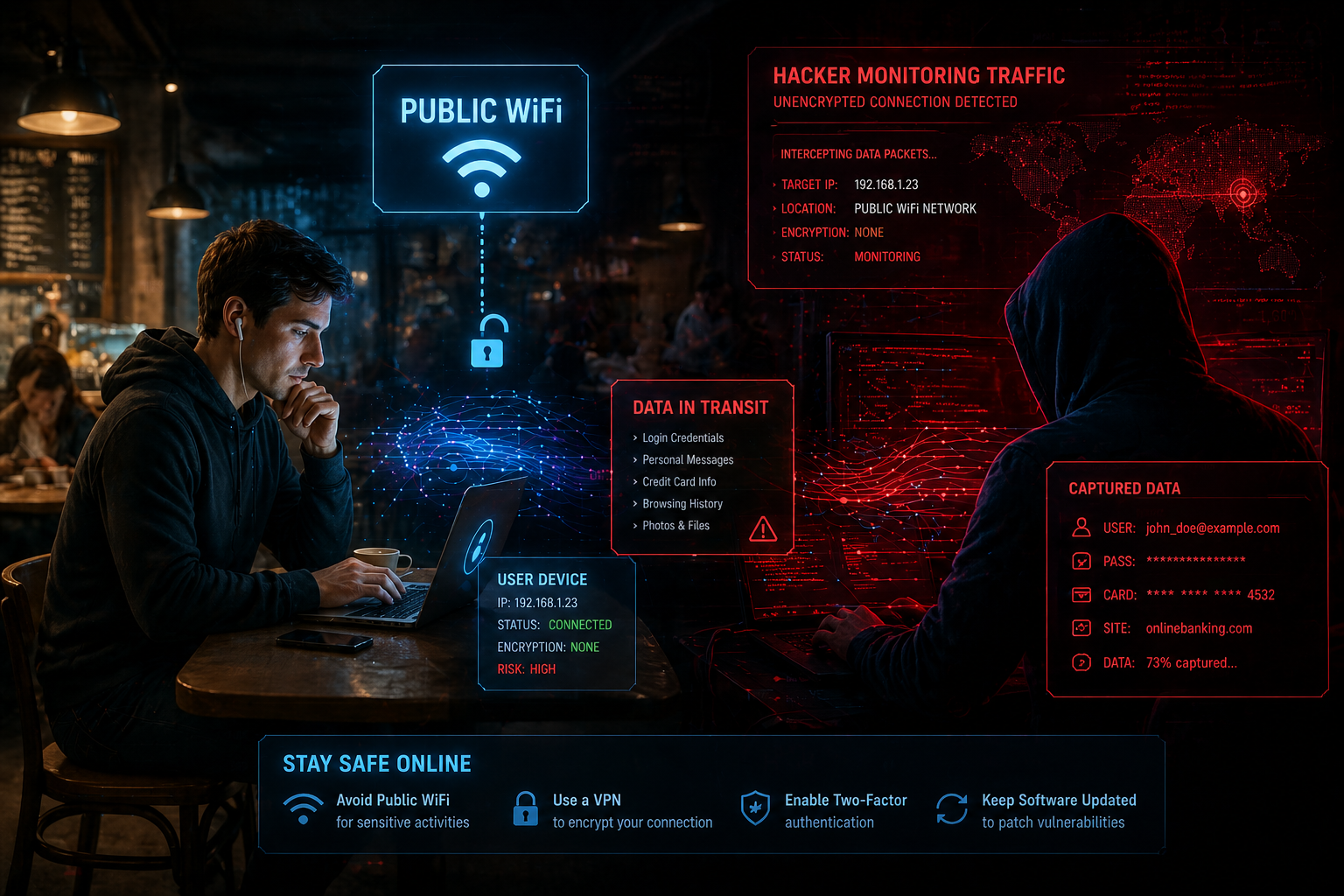
A student sits in a busy café.
Laptop open. Headphones on. Coffee beside them.
They connect to free Wi-Fi and start working.
But across the room, someone else is watching—not with their eyes, but through packets.
Every click. Every login. Every message.
What is Wi-Fi Hacking?
Wi-Fi hacking involves exploiting insecure wireless networks to:
- Intercept traffic
- Gain unauthorized access
- Launch attacks
Why Public Wi-Fi is Dangerous
Public Wi-Fi networks are:
- Unencrypted
- Open to everyone
- Easy to spoof
This makes them a perfect playground for attackers.
Common Wi-Fi Attacks
1. Evil Twin Attack
Fake Wi-Fi network that looks legitimate
2. Packet Sniffing
Capturing data transmitted over network
3. Session Hijacking
Stealing active sessions
Real Impact
- Stolen passwords
- Bank account compromise
- Personal data exposure
How to Stay Safe
- Use VPN
- Avoid sensitive logins on public Wi-Fi
- Verify network names
- Turn off auto-connect